I do not understand this work. I am a witness to it.
I should say how I came to Swati, because it was not as an observer. A year ago we were looking for someone who could work with our daughter, whose development was not arriving the way it does for other children. Somebody said Swati’s name. That is how we met.
What has happened since is very hard to put into words, and I have mostly stopped trying to explain it to people. What I can tell you is one thing I saw. In the second session there was a profound change in how she walks. She walked straight, without support. I was in the room. Nobody pushed on anything.
I want to be careful with that sentence, because it is exactly the kind of story that gets told badly. It is one child, one afternoon, and it proves nothing about anyone else. It is also true, and I was there.
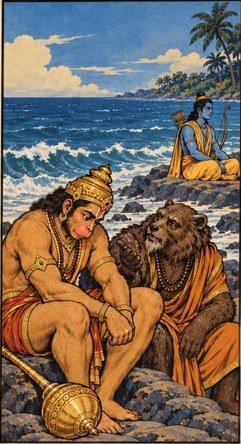
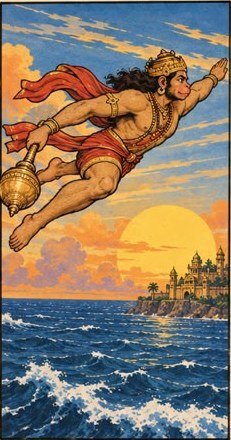
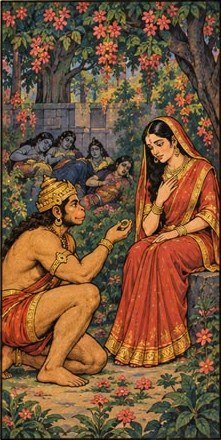
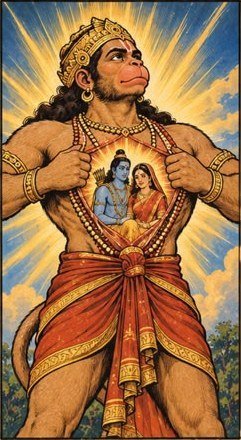
I am an engineer, not a scholar of the Ramayana, and I do not understand most of what Swati does. But a year of sitting in the room has given me a language for it, and the language that arrived was Hanuman’s. Everyone in India grows up with the scene: a monkey sitting on a shore, the ocean in front of him, unable to cross it — until an old bear reminds him that he could always fly. He had simply forgotten.
That is, as nearly as I can put it, what Swati does with her hands. She does not add anything to a body. She reminds it. I am writing this down while it is still happening to us, which is the only honest way I know to write it.
A caution before the rest. The six moments below are a reading, not a teaching. The Ramayana has carried many meanings for many people over a very long time, and this is one more, offered lightly. Swati has read a draft and sharpened one part of it, which I say where it happens; the rest, and any mistakes, are mine. Take what is useful.